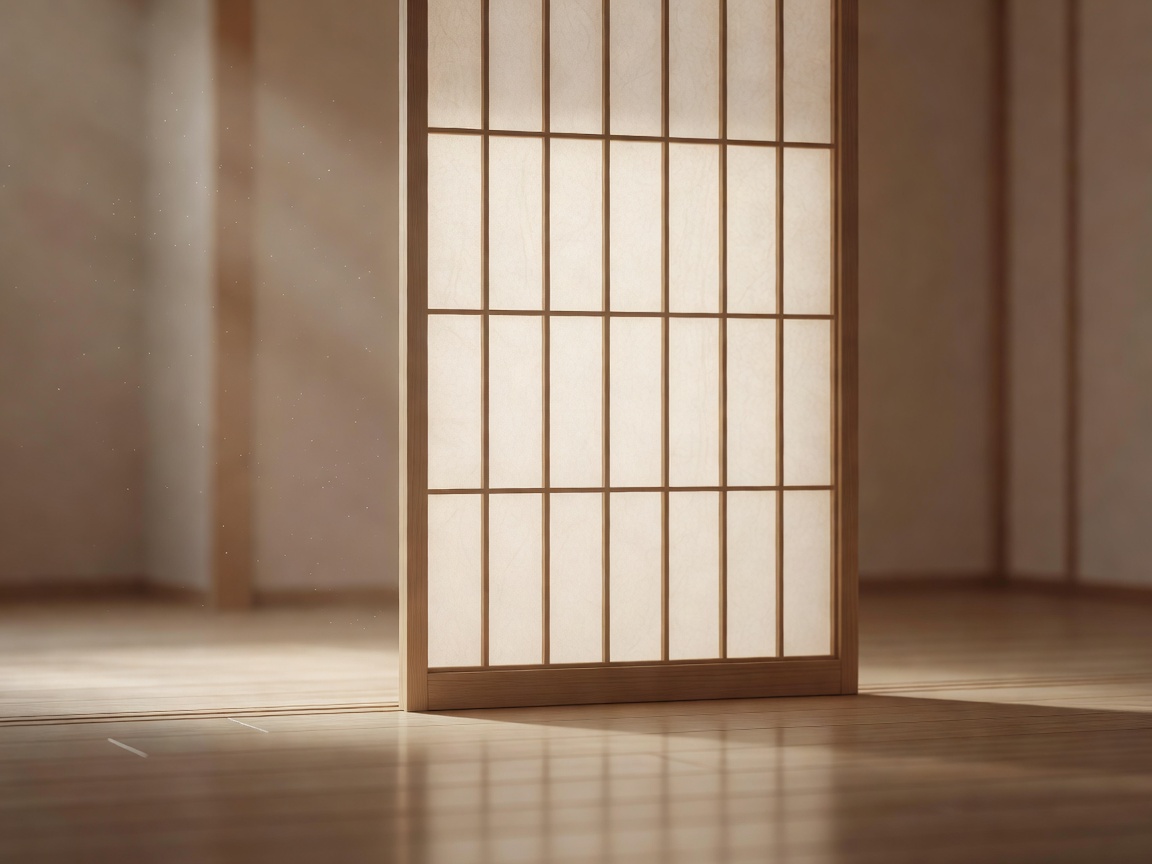
In Japanese architecture, light is not a utility meant to flood a room; it is an atmospheric element to be sculpted. The interplay of shadow and soft, diffused illumination creates the tranquil environment synonymous with Zen philosophy.
In Praise of Shadows
As Jun'ichirō Tanizaki famously wrote in In Praise of Shadows, traditional Japanese aesthetics celebrate the darkness just as much as the light. While modern homes often rely on harsh overhead lighting to eliminate all shadows, the Japanese interior uses shadows to grant depth, mystery, and intimacy to a space.
The Function of Shoji
Shoji screens are constructed using a wooden lattice covered in translucent washi paper. They serve multiple purposes:
- Diffusing Sunlight: Washi paper transforms harsh direct sunlight into a soft, ambient glow that lacks the sharp edges of conventional window shadows.
- Thermal Regulation: The paper provides a subtle layer of insulation while allowing the space to breathe.
- Spatial Flexibility: Traditional Japanese homes are fluid. Sliding shoji screens allow rooms to expand or contract based on the day's needs.
Adapting to Modern Homes
If installing authentic sliding shoji doors is impractical, the philosophy of diffused light can still be applied. Consider replacing heavy, opaque curtains with unbleached linen sheers. Swap harsh ceiling spotlights for low-level lamps fitted with paper shades—such as Isamu Noguchi's iconic Akari light sculptures—to gently bounce light off the lower half of the room.
| Lighting Type | Western Approach | Japanese Approach |
|---|---|---|
| Source | Direct overhead (chandeliers, spotlights) | Low-level, diffused (paper lanterns, floor lamps) |
| Goal | Eliminate shadows, total visibility | Create atmosphere, embrace shadows |
| Window Treatments | Opaque blinds or heavy curtains | Translucent shoji or sheer linen |