Wabi-Sabi is not merely an aesthetic; it is an intuitive worldview focused on the acceptance of transience and imperfection. In the context of the home, it teaches us to find beauty in things that are modest, humble, and unconventional.
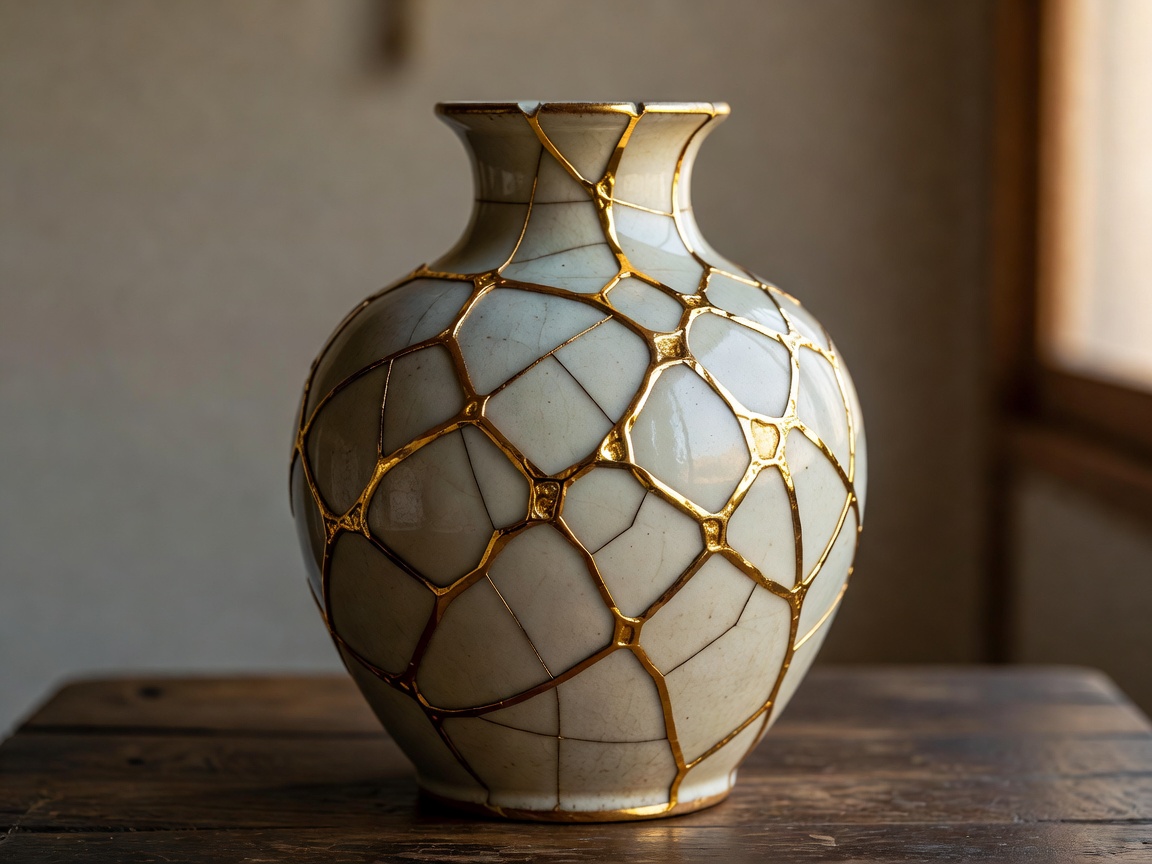
The Acceptance of Impermanence
Western architecture often seeks permanence—structures built to resist the passage of time. The Japanese approach, heavily influenced by Zen Buddhism, embraces the inevitable decay of all things. Wood that silvers with age, copper that develops a green patina, and raw linens that soften over years of use are all celebrated.
Material Honesty
To design a space with Wabi-Sabi in mind, one must prioritize natural, unrefined materials. Avoid synthetic plastics, highly polished modern metals, or overly symmetrical layouts. Instead, opt for:
- Raw, untreated wood for tables and floors
- Hand-thrown pottery with asymmetrical glazing
- Woven natural fibers for rugs and wall hangings
- Exposed plaster or textured earth-toned walls
The Art of Kintsugi
A powerful metaphor within this philosophy is Kintsugi, the art of repairing broken pottery with lacquer dusted in powdered gold, silver, or platinum. As a philosophy, it treats breakage and repair as part of the history of an object, rather than something to disguise. Translating this to interior spaces means allowing the natural wear of your home to show—a scuff on a wooden floor is a memory, not a flaw to be sanded away.