The traditional Japanese home is not designed as a fortress to keep nature out, but rather as a pavilion to invite nature in. Harmony is achieved when the division between interior and exterior architecture softly blurs.
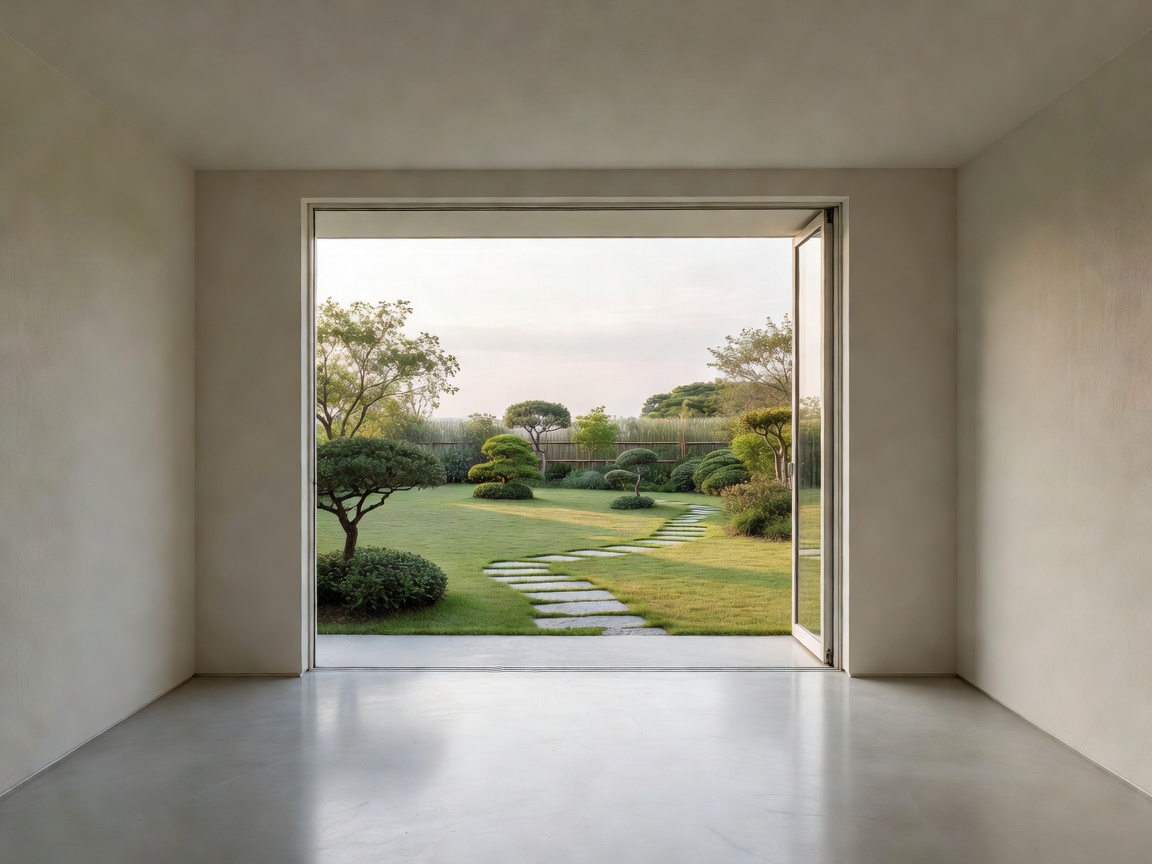
The Engawa: Bridging Worlds
The engawa is a wooden strip of flooring that runs along the outside of a traditional Japanese home, acting as a transition zone between the house and the garden. By sliding open the exterior doors, the engawa allows the room to flow continuously into the landscape. Even without an architectural engawa, modern spaces can achieve this feeling by utilizing large, unobstructed windows that frame the outdoors like a living painting.
Bringing the Outside In
Inviting nature into your space is more profound than simply placing a potted plant in a corner. It involves honoring the organic forms of the natural world:
- Ikebana: The art of flower arrangement that emphasizes shape, line, and form, often utilizing empty space to highlight the natural grace of a single branch.
- Bonsai: Cultivating miniature trees is a meditative practice that brings a scaled-down forest into the home, representing time and patience.
- Raw Stone & Water: Integrating elements like unpolished river stones in a bathroom, or a small, silent bamboo water feature to introduce the calming auditory element of nature.
Earth Tones and Natural Textures
The color palette of a Japanese-inspired space derives entirely from nature. Muted greens, deep earth browns, bamboo yellows, and the greys of stone establish a grounding environment. Synthetic colors pull the mind toward the artificial; earth tones root the mind in the present.